Selecting the correct charger for your motorcycle battery ensures longevity, reliability, and safe starts. Here’s a complete guide to help you pick the best charger.
1. Identify Your Motorcycle Battery Type
Motorcycles typically use one of these battery types:
(1) Lead-Acid (Flooded or Sealed) – Most Common
-
- Flooded (Wet Cell): Requires maintenance (water refills).
-
- Sealed (AGM/Gel): Maintenance-free, more expensive.
-
- Voltage: 12V (standard for most bikes).
(2) Lithium-Ion (LiFePO4) – Lightweight & High-Performance
-
- Pros: Lighter, longer lifespan, faster charging.
-
- Cons: More expensive, sensitive to overcharging.
-
- Voltage: 12V (but requires a special charger).
2. Match the Charger’s Specifications
(1) Voltage (V) – Must Be 12V for Most Motorcycles
-
- Lead-Acid: Needs 13.8V–14.7V (varies by battery type).
-
- Lithium (LiFePO4): Needs 14.4V–14.6V (specific to lithium).
(2) Current (A) – Determines Charging Speed
-
- Standard Charging (0.8A–2A): Safe for overnight charging.
-
- Fast Charging (3A–10A): Only for emergencies (not recommended for long-term use).
-
- Rule of Thumb:
-
- Small bikes (150cc–500cc): 0.8A–1.5A.
-
- Large bikes (600cc+): 1.5A–3A.
-
- Rule of Thumb:
(3) Charger Type
-
- Trickle Charger (0.5A–1.5A): Best for long-term maintenance.
-
- Smart Charger (Multi-Stage): Auto-adjusts for optimal charging.
-
- Jump Starter/Charger Combo: For emergency starts.
3. Types of Motorcycle Battery Chargers
(1) Standard Trickle Charger
-
- Pros: Cheap, good for maintenance.
-
- Cons: Slow, no auto-shutoff.
-
- Example: Battery Tender Junior (0.75A).
(2) Smart Charger (Best Choice)
-
- Pros: Auto-detects battery type, prevents overcharging.
-
- Cons: Slightly more expensive.
-
- Example:
-
- NOCO Genius 1 (1A) – For lead-acid & lithium.
-
- Optimate 4 (0.8A) – Advanced diagnostics.
-
- Example:
(3) Fast Charger (3A–10A)
-
- Pros: Quick charge for emergencies.
-
- Cons: Can damage battery if overused.
-
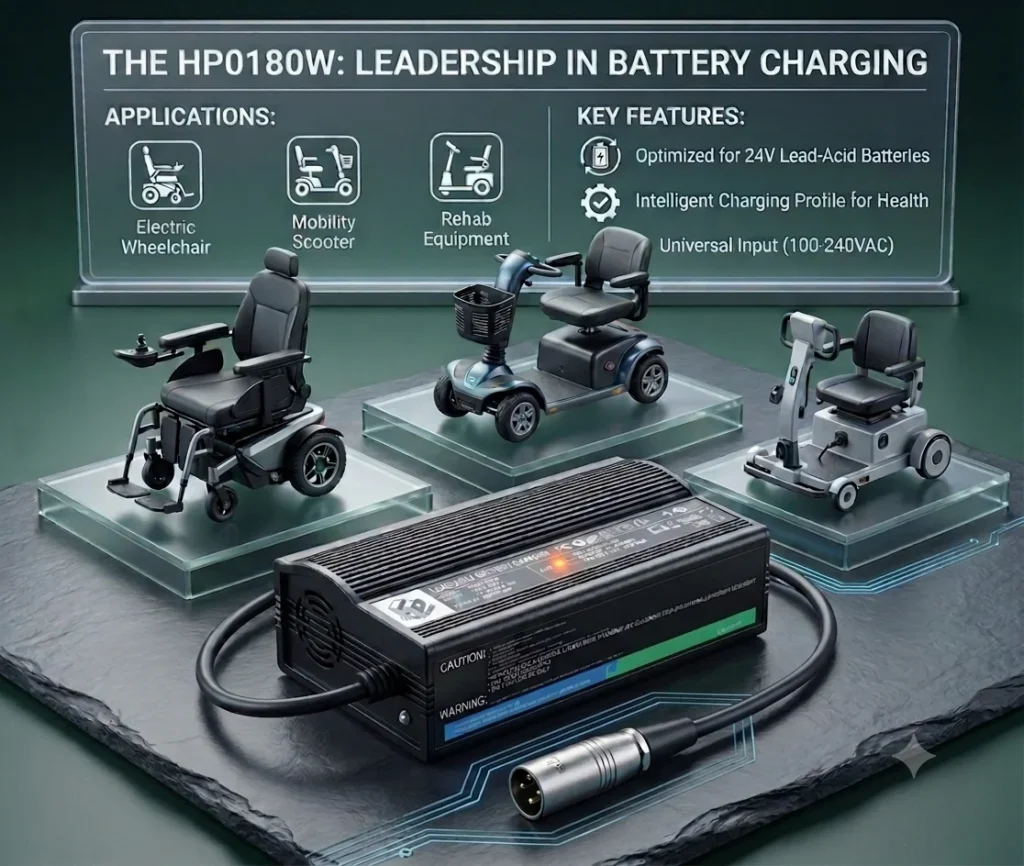
- Example: HP0060W 12V3A/HP0180W 12V8A
(4) Solar Charger (For Storage)
-
- Pros: No electricity needed, great for long-term storage.
-
- Cons: Slow, depends on sunlight.
-
- Example: Battery Tender Solar 5W.
4. Safety & Maintenance Tips
✔ Always disconnect the battery before charging (if possible).
✔ Use a smart charger to prevent overcharging.
✔ Store batteries at 50%–80% charge if unused for months.
✔ For lead-acid, check water levels (if applicable).
❌ Never use a car charger (too high amperage for bikes).
5. Recommended Chargers by Battery Type
| Battery Type | Best Charger | Charging Time |
|---|---|---|
| 12V Lead-Acid (Flooded/AGM) | High Power HP1202A (1A) | 8–12 hrs |
| 12V Lithium (LiFePO4) | High Power HP0060WL1 (1.25A) | 4–6 hrs |
| Fast Charge (Emergency) | High Power HP0180W (8A) | 1–2 hrs |
| Long-Term Storage | Battery Tender Plus(1.25A) | Trickle mode |
6. FAQ
Q1: Can I use a car battery charger on my motorcycle?
❌ No! Car chargers deliver too much current (10A–50A), which can fry a small motorcycle battery.
Q2: How often should I charge my motorcycle battery?
-
- If riding weekly: No need to charge.
-
- If storing >1 month: Use a trickle/smart charger.
Q3: Why won’t my battery hold a charge?
-
- Possible causes: Old battery, parasitic drain, or faulty charging system.
Final Recommendation
-
- Best Overall: High Power HP0060W (1A) – Works for lead-acid & lithium.
-
- For Lithium Batteries: High Power HP0060W (1.25A).
-
- For Storage: Battery Tender Plus (1.25A).
Choose the right charger to keep your bike starting smoothly every time! 🏍️⚡