How to Choose the Right Electric Scooter Battery Charger: Voltage, Capacity and Charging Rate Guide
Learn how to choose the right electric scooter battery charger based on battery voltage, capacity, and charging current. Compare 12V, 24V, 36V, and 48V scooter chargers and find the right charging solution.
Choosing the right electric scooter battery charger is essential for safe and reliable charging.
A charger that does not match the battery voltage may fail to charge the battery correctly. A charger with an unsuitable charging current may also affect charging time, battery performance, and battery life.
For electric scooters and mobility scooters, the correct charger should be selected based on several key factors:
- Battery voltage
- Battery capacity
- Battery chemistry
- Charging current
- Battery Management System (BMS)
- Charger compatibility
- Connector type
This guide explains how to select a suitable scooter battery charger for common 12V, 24V, 36V, and 48V battery systems.
Important: The charging rates in this guide are general reference values for the battery capacities shown. Always follow the battery manufacturer’s recommended charging current and maximum charging rate. Lithium batteries must be charged with a compatible charger and BMS.
1. Why Battery Voltage Matters When Choosing a Scooter Charger
The first step when selecting an electric scooter battery charger is identifying the battery system voltage.
Common battery systems include:
- 12V
- 24V
- 36V
- 48V
The charger’s charging voltage must be compatible with the battery system.
For example, a 24V battery pack requires a charger specifically designed for a 24V battery system. A 48V battery system requires a charger designed for 48V applications.
Using the wrong charger voltage can cause:
- Charging failure
- Battery damage
- Reduced battery performance
- Potential safety risks
Therefore, always confirm the battery voltage before selecting a charger.
2. Battery Capacity and Charging Current
Battery capacity is usually measured in Ah (Ampere-hours).
For example:
- 10Ah
- 15Ah
- 20Ah
- 30Ah
- 50Ah
Battery capacity provides an indication of how much energy the battery can store.
The charging current, measured in A (Amperes), affects how quickly the battery can be charged.
In general:
Higher charging current → Shorter charging time
Lower charging current → Longer charging time
However, a higher current is not always better.
The recommended charging current depends on:
- Battery capacity
- Battery chemistry
- Battery manufacturer’s specifications
- Battery temperature
- BMS limitations
Therefore, charger current should always be selected based on the battery manufacturer’s requirements.
3. Recommended Charging Rates for Electric Scooter Battery Packs
The following table provides general reference charging rates for common scooter battery pack configurations.
The categories are:
🟢 Slow Charging – Generally gentler charging and may help reduce battery stress.
🟡 Medium Charging – A balance between charging time and battery longevity.
🟠 Fast Charging – Requires a battery designed to accept higher charging current and appropriate thermal management.
🔴 High-Load Fast Charging – Suitable only when specifically supported by the battery manufacturer and battery management system.
12V Electric Scooter Battery Charger
| Battery Capacity | Slow Charging | Quick Charging | Recommended Charger |
|---|---|---|---|
| 5–8Ah | 🟢 12V 1A | 🟡 12V 2A | HP0060WA(L1)-12V1A |
| 9–15Ah | 🟢 12V 1.5A | 🟡 12V 3A | HP0060WA(L1)-12V3A |
| 17–22Ah | 🟠 12V 3A | 🔴 12V 6A | HP0180WA(L1)-12V6A |
A 12V scooter battery charger is commonly used for smaller battery systems.
For smaller capacity batteries, 1A to 3A charging may provide a reasonable balance between charging time and battery stress.
For larger 17–22Ah battery packs, higher-current charging may reduce charging time, but the battery must be designed to support the selected charging current.
24V Electric Scooter Battery Charger
| Battery Capacity | Slow Charging | Quick Charging | Recommended Charger |
|---|---|---|---|
| 5–9Ah | 🟢 24V 1A | 🟡 24V 2A | HP0060WB(L2)-24V2A |
| 9–15Ah | 🟢 24V 1.5A | 🟡 24V 3A | HP0090WB(L2)-24V3A |
| 17–22Ah | 🟠 24V 3A | 🔴 24V 6A | HP0180WB(L2)-24V6A |
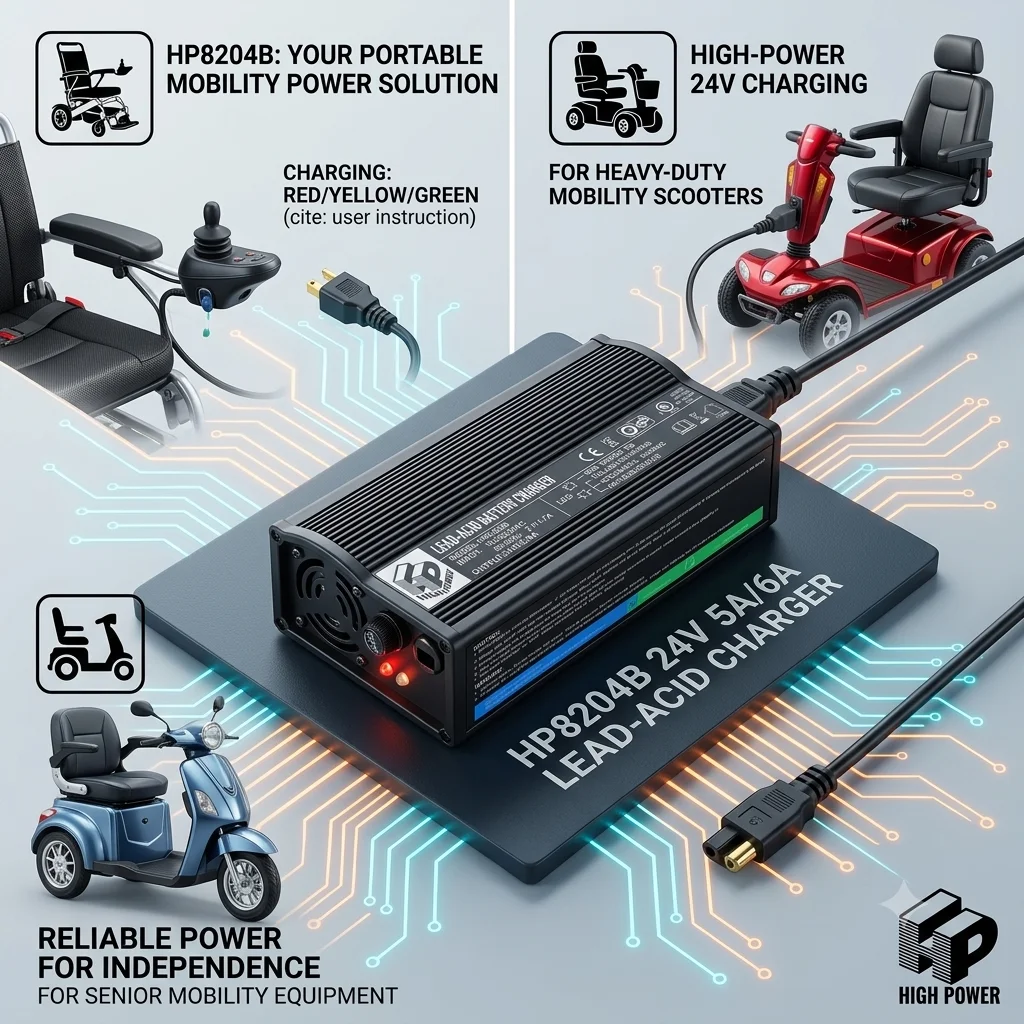
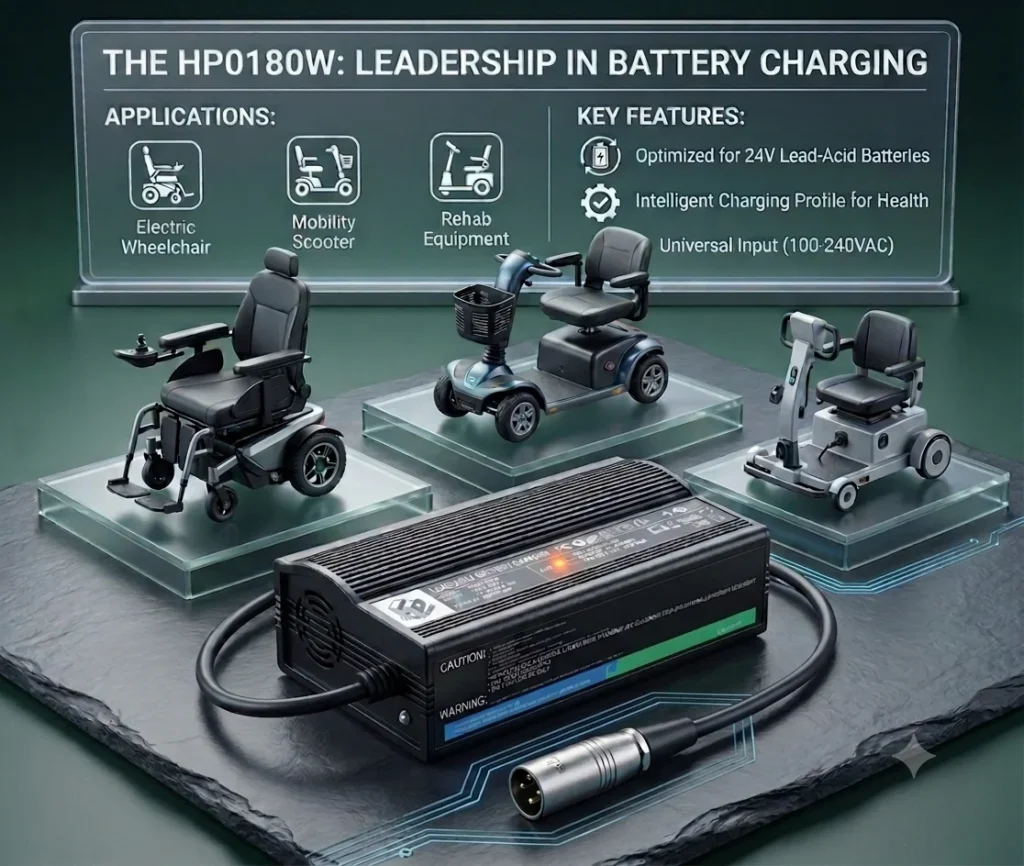
The 24V battery charger is a common charging solution for electric wheelchairs and mobility scooters.
For example, a 24V 17–22Ah battery pack may use a 24V 3A charger for slower charging or a 24V 6A charger for faster charging, provided that the battery manufacturer approves the charging current.
The HP0180WB(L2)-24V6A is one of Elite-HP’s 24V 6A charging solutions for mobility applications.
36V Electric Scooter Battery Charger
| Battery Capacity | Slow Charging | Quick Charging | Recommended Charger |
|---|---|---|---|
| 5–8Ah | 🟢 36V 1A | 🟡 36V 2A | HP0060WC(L3)-36V1.2A |
| 9–15Ah | 🟢 36V 1.5A | 🟡 36V 3A | HP0180WC(L3)-36V3A |
| 17–22Ah | 🟠 36V 3A | 🔴 36V 6A | HP0420WC(L3)-36V6A |
A 36V scooter battery charger is commonly used in higher-voltage mobility and electric vehicle applications.
When selecting a charger, the battery’s nominal voltage and full-charge voltage must both be considered.
The charger must be designed specifically for the battery chemistry and charging profile.
48V Electric Scooter Battery Charger
| Battery Capacity | Slow Charging | Quick Charging | Recommended Charger |
|---|---|---|---|
| 5–8Ah | 🟢 48V 1A | 🟡 48V 2A | HP0180WD(L4)-48V2A |
| 9–15Ah | 🟢 48V 1.5A | 🟡 48V 3A | HP0180WD(L4)-48V3A |
| 17–22Ah | 🟠 48V 3A | 🔴 48V 6A | HP0420WD(L4)-48V6A |
A 48V scooter battery charger is generally used for higher-power electric mobility applications.
Because 48V battery systems can use different battery chemistries and configurations, it is especially important to confirm the battery’s exact charging requirements before selecting a charger.
4. Slow Charging vs Fast Charging: Which Is Better?
There is no single charging rate that is best for every electric scooter battery.
The right charging current depends on the battery design.
Slow Charging
Slow charging generally uses a lower charging current.
Advantages may include:
- Lower thermal stress
- Longer charging time
- Potentially gentler charging
This option may be suitable when charging time is not a priority.
Medium Charging
Medium charging provides a balance between charging speed and battery stress.
It may be suitable for:
- Daily charging
- Mobility scooters
- Electric wheelchairs
- Regular-use battery systems
Fast Charging
Fast charging uses a higher charging current to reduce charging time.
However, fast charging should only be used when supported by the battery manufacturer.
The battery system should have appropriate:
- Charging specifications
- Thermal management
- BMS protection
5. Battery Chemistry Also Matters
Voltage and capacity are not the only factors to consider.
Battery chemistry is equally important.
Lead-Acid Batteries
Common types include:
- SLA
- AGM
- Gel
Lead-acid batteries generally require a dedicated charging profile.
The charger should be designed specifically for the battery type.
Lithium-Ion Batteries
Lithium-ion batteries require precise charging control.
A compatible charger may need to work together with the battery’s BMS.
Important factors include:
- Charging voltage
- Charging current
- CC/CV charging profile
- BMS protection
Never assume that a charger designed for a lead-acid battery can be used with a lithium battery simply because the nominal voltage is the same.
6. How to Calculate Approximate Charging Time
A simple estimate can be calculated using:
Charging Time ≈ Battery Capacity (Ah) ÷ Charging Current (A)
For example:
A 20Ah battery charged at 2A:
20Ah ÷ 2A = approximately 10 hours
A 20Ah battery charged at 5A:
20Ah ÷ 5A = approximately 4 hours
However, actual charging time will usually be longer.
This is because:
- Charging current may decrease near full charge
- Charging efficiency is not 100%
- Battery chemistry affects charging behavior
- The charger may enter a constant-voltage stage
Therefore, this calculation should only be used as a general estimate.
7. How to Choose the Right Electric Scooter Battery Charger
Before purchasing a scooter battery charger, check these seven specifications:
1. Battery Voltage
Is the battery system:
12V, 24V, 36V, or 48V?
2. Battery Capacity
How many Ah does the battery have?
3. Battery Chemistry
Is it:
- SLA?
- AGM?
- Gel?
- Lithium-ion?
- LiFePO4?
4. Charging Current
What is the battery manufacturer’s recommended charging current?
5. Charging Profile
Does the charger use the correct charging algorithm?
6. Connector
Does the charger connector match the scooter charging port?
7. Certification and Safety
For medical mobility applications, additional standards and certifications may be required.
8. Elite-HP Electric Scooter and Mobility Charger Solutions
Elite-HP provides OEM battery charger solutions for:
- Electric scooters
- Mobility scooters
- Electric wheelchairs
- Medical mobility equipment
Our product range includes different voltage and current options for:
- 12V battery systems
- 24V battery systems
- 36V battery systems
- 48V battery systems
Available charging solutions include:
- 1A chargers
- 1.2A chargers
- 1.5A chargers
- 2A chargers
- 3A chargers
- 6A chargers
Selected models are available for different battery chemistries and mobility applications.
OEM customization can include:
- Output voltage
- Charging current
- DC connector
- Cable
- Label
- Housing
- Certification requirements
Conclusion
Choosing the right electric scooter battery charger requires more than matching the voltage.
Battery capacity, chemistry, charging current, charging profile, connector, and BMS compatibility should all be considered.
For smaller battery packs, lower charging currents may provide a slower and potentially gentler charging experience. Higher-current chargers can reduce charging time, but they should only be used when supported by the battery manufacturer and battery management system.
Whether you need a 12V, 24V, 36V, or 48V scooter battery charger, selecting the correct charging solution is essential for reliable and safe operation.
Elite-HP provides OEM battery charger solutions for electric scooters, mobility scooters, wheelchairs, and other mobility applications.
Related Products
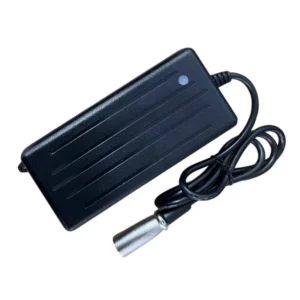
HP0090WB(L2) 24V3A Electric Scooter Charger
Have Questions About Chargers?
Our engineering team is ready to help. Send us your inquiry — we respond within 24 hours.
Response within 24 hours
Need a Customized Electric Scooter Battery Charger?
Elite-HP has specialized in medical, wheelchair, and mobility scooter chargers since 1993. Get your quotation within 24 hours.